Huawei's nova 15 Series: Shaking Up the Mid-Range Market with Flagship Camera Tech
On December 22, Huawei held a major launch event for its nova 15 series and a range of all-scenario products. While the event featured several new devices, the spotlight was firmly on the nova 15 series. This new lineup, which has seen comprehensive innovations from its imaging system to its industrial design, had already generated significant buzz prior to its official release. Let's dive into what makes this series a potential game-changer.
Dual Hongfeng Cameras on Front and Rear: This nova Generation is Fierce
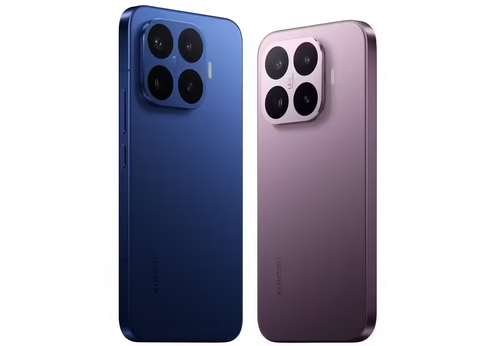
The most striking feature of the nova 15 series is its "Dazzling Dual-Star" design, which employs a horizontal, three-dimensional stacked style to centralize the visual focus on the back. While initial renders led to some online debate, the in-person experience reveals a depth and three-dimensionality that 2D images cannot capture. The unique design, especially in the new "Dynamic Green" colorway, offers a distinct look that stands out from the common vertical or circular camera modules, clearly targeting the aesthetic preferences of younger users.

However, the true star of the show is the imaging system. The nova 15 Pro and Ultra are the first to feature the "Dual Hongfeng (Red Maple)" camera setup on both the front and rear cameras—a treatment not even seen on the flagship Mate series. This ensures color consistency between selfies and main camera shots, a common pain point for users. Huawei claims that with the Hongfeng system, the front camera's color reproduction accuracy is improved by 120%, delivering true-to-life colors even under complex lighting conditions, thanks to the Da Vinci portrait engine and pixel-level spectral perception algorithms.

The rear camera system is equally impressive. The nova 15 Ultra is equipped with a full 50-megapixel all-RYYB Hongfeng imaging system, a technology previously reserved for high-end flagships. This upgrade delivers significant improvements, with sample photos showing precise color reproduction, excellent light-dark contrast, and outstanding detail retention. Beyond the cameras, the entire series receives substantial upgrades. The standard nova 15, in particular, offers a massive performance boost, 100W wired charging, and HarmonyOS smart communication, making it arguably the best value-for-money option in the lineup for those prioritizing smooth daily performance over top-tier photography.
The series also democratizes flagship features like Beidou and Tiantong dual-satellite communication. The nova 15 Ultra even introduces 50W wireless flash charging to the series for the first time, complementing its 100W wired fast charging.

Tablets, Watches, and Smart Home: Everything You Wanted is Here
Beyond the smartphones, Huawei also unveiled the new MatePad 11.5, which focuses on "healthy learning" with its upgraded Cloudy Clear Soft Light screen. This display uses a nano-magnetron optical coating to eliminate 99% of ambient light interference, ensuring clarity even at lower brightness levels to reduce eye strain. To celebrate the 10th anniversary of the Huawei WATCH, a special edition was launched with exclusive colors and a "10 YEARS" logo. A new "Health Dashboard" watch face integrates 12 key health metrics into a single screen. Additionally, the WATCH GT 6 series received an update with enhanced features for skiing.

The event concluded with new additions to the HarmonyOS Smart Home ecosystem. The highlight was the Smart Host X2 Pro, the first smart home host powered by a flagship mobile-grade chip, enabling more complex AI functions like 3D directional light control. Huawei also introduced simplified installation solutions for both new and existing homes, addressing common consumer concerns. This launch event not only demonstrates Huawei's determination to dominate the mid-range phone market but also showcases the formidable product and ecosystem barriers it has built in the tablet, wearable, and smart home sectors, all seamlessly integrated under HarmonyOS.