Best VR Headset Updates and New Releases to Watch in 2025
You have a lot to look forward to in 2025. The most anticipated VR headsets include Samsung XR, Valve Deckard, Pimax Dream Air, HTC Vive Focus Vision, HTC Vive Pro 2, and the rumored Apple Vision Pro 2/Lite. Each headset brings something new to the table. Here’s a quick look at what’s coming:
| VR Headset Model | Key Features | Target Users |
|---|---|---|
| Valve Deckard | Enhanced visuals, improved motion tracking, wireless connectivity | VR fans seeking immersive visuals |
| Samsung XR Headset | High-res AMOLED, lightweight, Galaxy ecosystem integration | Productivity users, gamers |
| HTC Vive Focus Vision | Hybrid standalone/PCVR, 5K display, DisplayPort streaming | Versatile VR users |
| Pimax Dream Air | Ultra-light, wide field of view, wireless capabilities | Hardcore gamers, VR enthusiasts |
| Apple Vision Pro 2/Lite | Better battery, lighter build, expanded app ecosystem | Tech enthusiasts, professionals |
Main Features
Let’s break down the features that matter most. Most new models focus on high-resolution displays, like 4K OLED or AMOLED panels. You’ll see lighter designs for comfort during long sessions. AI-driven features make setup and gameplay smoother. Eye and gesture tracking add new ways to interact with virtual worlds. Release dates range from early spring to late 2025, so you can plan your upgrade. Samsung’s Project Moohan stands out with Android XR and Google service integration. Pimax Dream Air offers wireless freedom and crisp visuals. Apple’s rumored headset promises a lighter build and longer battery life. With these options, you can find a headset that fits your needs, whether you want top-tier gaming or a versatile device for work and play.
Best VR Headset Comparison
Specs & Differences
You want to know what sets each VR headset apart in 2025. Let’s break down the specs, display types, tracking, and price ranges so you can spot the Best VR HEADSET for your needs.
| VR Headset | OS | Display Type | Tracking | Processor | Weight (g) | Price Range | Notable Features |
|---|---|---|---|---|---|---|---|
| Samsung XR | Android XR | 4K AMOLED | Eye tracking, room | Snapdragon XR2+ Gen 2 | <200 | $1000+ | Galaxy ecosystem, wired battery |
| Valve Deckard | Not specified | High-res (rumored) | Inside-out, wireless | Not specified | Not known | $900-$1200 | Enhanced visuals, wireless |
| Pimax Dream Air | Not specified | 4K OLED | Eye, room tracking | Not specified | <200 | $1200 | Ultra-light, wireless, wide FOV |
| HTC Vive Focus Vision | Android XR | 5K LCD | Eye, hand tracking | Snapdragon XR2+ Gen 2 | ~625 | $1100-$1300 | Hybrid PC/standalone, DisplayPort mode |
| HTC Vive Pro 2 | Windows | 5K LCD | SteamVR tracking | Not specified | ~850 | $800-$1200 | Pro-grade visuals, business features |
| Apple Vision Pro | visionOS | 4K micro OLED | Eye, hand tracking | Apple M2/M5 (rumored) | 600-650 | $3500+ | External battery, advanced AR, comfort kits |
| PSVR2 | PlayStation | OLED | Inside-out, IPD slider | Not specified | ~560 | <$400 | SteamVR support, wide FOV, budget-friendly |
| Meta Quest 3 | Meta OS | LCD | Inside-out, hand tracking | Snapdragon XR2 | ~515 | $500-$600 | Budget-friendly, cable option, easy setup |
*Tip: Lighter headsets like Pimax Dream Air and Samsung XR feel more comfortable for long sessions. Heavier models such as Apple Vision Pro may need extra straps or padding for better weight distribution.
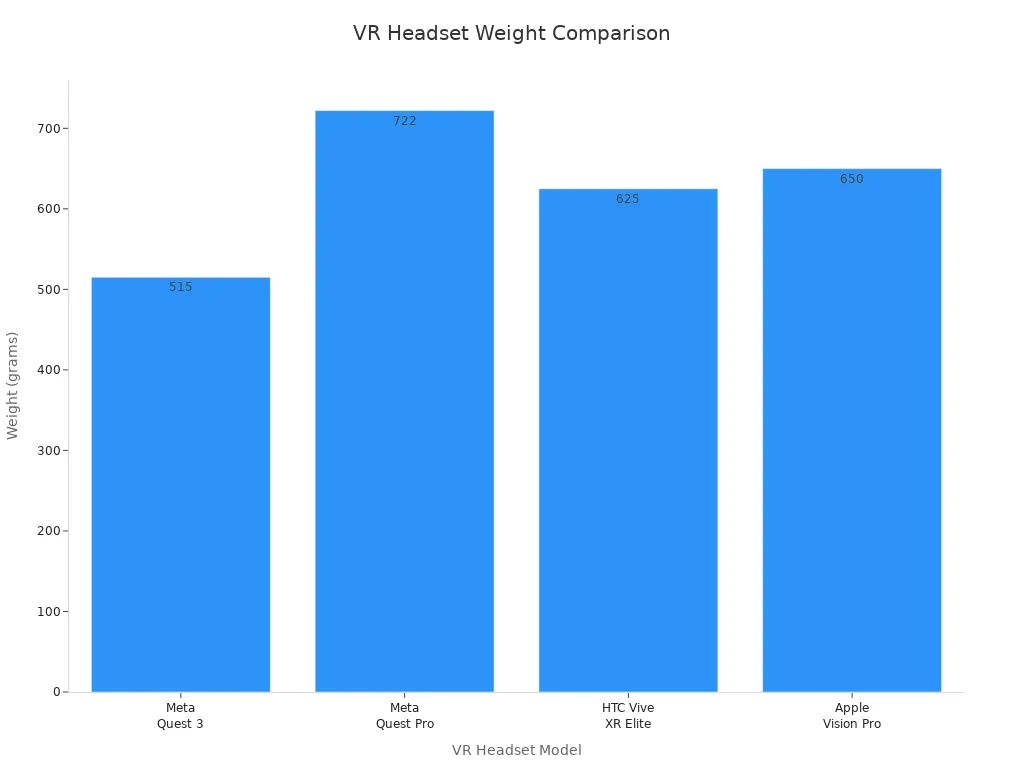
You’ll notice that display quality and tracking features keep improving. Most new models offer 4K or higher resolution, with OLED or AMOLED panels for deep colors and sharp images. Eye and hand tracking are now standard on premium headsets. If you want the Best VR HEADSET for comfort, check the weight and battery placement. Front-heavy designs like Apple Vision Pro can cause fatigue, but accessories help balance the load.
Software ecosystems also matter. Most headsets support a wide range of apps, from games to productivity tools. You’ll find free, freemium, and pro-grade software for every need. Some, like Samsung XR and Apple Vision Pro, offer deep integration with their platforms, while others, like PSVR2 and Meta Quest 3, focus on broad compatibility.
*Note: Meta Quest 4 won’t arrive until 2027. Meta scrapped several prototypes and shifted focus to a new high-end headset for productivity and mixed reality. For now, you’ll want to look at the Best VR HEADSET options available in 2025.
User Types
Choosing the Best VR HEADSET depends on how you plan to use it. Here’s a quick guide to help you match your needs:
For Gamers 🎮
- PSVR2: Top value for gamers in 2025. It costs less than $400, has a real IPD slider, a wide FOV, and an OLED display. You can connect it to SteamVR for PC gaming, though some users report minor app issues. If you want great visuals and don’t mind a wired setup, PSVR2 is hard to beat.
- Valve Deckard: If you crave wireless freedom and immersive visuals, keep an eye on this one. It’s designed for gaming enthusiasts and promises next-level tracking and display quality.
- Pimax Dream Air: Hardcore gamers love its ultra-light build, wide field of view, and wireless capabilities. It’s perfect for long sessions and fast-paced action.
For Professionals 🧑💼
- HTC Vive Focus Vision & Pro 2: These headsets shine in business and education. You get hybrid PC/standalone modes, hot-swappable batteries, and eye tracking for training and collaboration. The Focus Vision Business Edition is built for manufacturing, healthcare, and design, with features like DisplayPort mode and enterprise-grade software.
- Apple Vision Pro: If you work in design, media, or tech, this headset offers advanced AR, high-res displays, and a growing app ecosystem. You may need comfort accessories for longer use, but the features are top-notch.
For General Users
- Meta Quest 3: This is the Best VR HEADSET for budget-conscious users. It’s easy to set up, lightweight, and supports desktop passthrough for physical controls. You get good image clarity and cable connection for extended play. It’s perfect for casual gaming, social VR, and exploring new apps.
- Samsung XR: If you want a balance of productivity and entertainment, this headset fits the bill. It’s lightweight, integrates with the Galaxy ecosystem, and offers mixed reality features.
Pro Tip: Higher-end headsets deliver better visuals and tracking but often cost more and may require powerful PCs. Budget models like Meta Quest 3 and PSVR2 offer solid performance for most users.
So, what’s your top pick? Which headset excites you the most? Stay tuned for more updates as the best VR headset market continues to evolve!