Portable Projectors in 2026: What to Look for Before You Buy

There’s nothing quite as cozy as getting under the blankets, putting your favorite movie on a big screen, and settling in for a cinema night at home. A portable projector makes it easy to set up that experience in the living room, bedroom, or even outside once the sun goes down.
They’re also useful for much more than the occasional movie night. Portable projectors can give you a big screen for streaming, gaming, sports, or family viewing without having a large TV permanently taking up space. Some are small enough to throw in a bag, while others are better suited to moving around the house. Features like built-in streaming, speakers, autofocus, and battery power can also make setup much simpler.
Choosing between them gets harder once you start comparing resolution, brightness, streaming platforms, and all the other specs.
This guide covers what to look for when buying a portable projector and some of the best options for 2026, along with first-hand experiences from the Heyup community.
What Makes a Projector Portable?
A portable projector is small enough to move and set up without a permanent installation, but that can mean different things depending on the model.
Some are designed to travel, with a compact body and built-in battery. Others are better suited to moving between rooms at home. They may weigh a little more and need mains power, but you can still pick them up, place them somewhere else and start watching again without much effort.
Features around the projector can make that easier. Built-in speakers reduce the amount of equipment you need, while streaming software can remove the need for a separate stick or box. An integrated stand can help with positioning, and autofocus or keystone correction can reduce the amount of adjustment needed after you move it.
Before buying, think about what “portable” means for you. Moving from the living room to the bedroom is very different from carrying a projector on a camping trip.
Where Can You Use a Portable Projector?
Around the house is probably where most portable projectors will spend their time. A blank bedroom wall can become a screen for a movie, while a projector in the office or spare room can give you somewhere else to watch sport or play games.
Outdoor movie nights are another option, although lighting makes a big difference. Most portable projectors are far more comfortable once the sun has gone down.
Travel is where size and power requirements start to matter more. A projector with a battery, streaming platform, and built-in speakers can travel with relatively little else. A plug-in model can still come along, but you will need somewhere to power it.
What to Look for When Buying a Portable Projector
Native Resolution
Projector listings often mention Full HD, 4K, and sometimes even 8K, so it is worth checking exactly what those labels refer to. Native resolution tells you the resolution the projector itself displays.
Full HD, or 1920 × 1080, is a practical choice for movies and everyday streaming. It provides enough detail for a large picture and is available across a wide range of portable projectors. Native 4K provides more detail and usually comes at a higher price.
You may also see a 1080p projector advertised as supporting 4K. In this case, the projector can accept 4K content and display it at its native resolution. Check the native figure when comparing models so you know what will actually appear on screen.
Brightness
Brightness affects how well the image holds up against the light already in the room.
A projector used in a dark bedroom has a much easier job than one facing daylight through a window. This is also why a projector that looks impressive at night can appear washed out in the afternoon.
ANSI lumens are commonly used to describe projector brightness, although manufacturer figures should still be read alongside independent measurements or real-world testing where available.
The size of your projected image changes the result too. The larger the image becomes, the more widely the available light is spread.
Throw Distance
Throw distance determines how far the projector needs to sit from the wall or screen. Throw ratio then describes the relationship between that distance and the width of the projected image.
For smaller rooms, this is quite important. A projector may be capable of producing a huge screen, but the room still needs enough distance to create it. Measure the likely projector position and the available wall space before choosing a model.
Short-throw projectors can create larger images from closer positions and may suit rooms where space is tight. Standard-throw models generally need more distance, so checking the manufacturer's projection chart or throw ratio can help you work out what will fit.
Size, Weight, and Battery Life
Portability means something different at home than it does on a trip. For room-to-room use, a manageable weight and a convenient stand can make a projector easy to live with. Travel puts more emphasis on compact dimensions and battery life.
Battery specifications are most informative when they include expected video playback time. If you want to watch a full film outdoors, the projector needs enough runtime to cover it comfortably.
When packing, the power setup is also important. USB-C charging can be convenient if other devices already use the same type of charger. If your projector comes with a separate power adapter, all you have to do is make room in your bag for it.
Autofocus and Keystone Correction
Every time a projector moves, the image may need to be focused and squared up again. Autofocus takes care of sharpness, while keystone correction helps turn a trapezoid-shaped image back into a rectangle when the projector is sitting at an angle.
Some projectors add screen recognition or obstacle avoidance, which can resize the image to fit the available wall or work around objects in the way. These features become more apparent when you are regularly carrying a projector from one place to another.
Smart TV and Streaming
Built-in streaming can make a projector feel much more self-contained.
Google TV is available on some portable models, while others use Android-based platforms or their own systems. The experience can vary considerably between them, so the operating system is worth checking rather than treating every “smart projector” as the same thing.
Netflix support deserves its own look. Some projectors have licensed native support, while others rely on different app implementations or an external streaming device.
Built-In Speakers
Built-in speakers keep the setup compact and work well for casual viewing. In a bedroom or when traveling, they also save you from carrying or setting up a separate speaker.
Speaker power gives you some idea of what to expect, although room size and speaker placement also affect the experience. Bluetooth support gives you the option of adding a wireless speaker when you want fuller sound.
For regular movie nights in a larger room, an external speaker or sound system can still be a worthwhile addition.
Connectivity
HDMI gives you the option of connecting a console, laptop, or separate streaming device. USB may be useful for local files, while Wi-Fi and Bluetooth cover streaming, mirroring and wireless audio.
Gamers should also look at input lag rather than assuming HDMI alone makes a projector a good gaming choice.
Portable Projectors to Consider in 2026
The most useful way to compare portable projectors is to match them to the job they are going to do.
A low-cost projector that spends most evenings in a dark bedroom has a different set of priorities from one that needs to survive a weekend away from a wall outlet. The Heyup community reviews give us a closer look at those differences because members have actually moved these projectors around, watched films on them, tried their streaming software, and used them in different lighting conditions.
Budget-Friendly Home Pick: Magcubic HY450MAX
For: First-time projector buyers and families looking for an extra screen around the house.

Sourced from dsmonteiro
At a lower price point, native resolution, brightness, and easy image adjustment are useful places to start. For a projector that will mainly be used at home, it also helps if it can be moved between rooms without making setup a chore.
The Magcubic HY450MAX was priced at around $225 when Heyup community member dsmonteiro reviewed it. It has native 1080p resolution, Android 14, autofocus, four-corner keystone correction, screen recognition, and obstacle avoidance.
Magcubic lists brightness at 1,100 ANSI lumens, and community testing gives some useful context around that figure. Enrico_NonSoloRobot tested the projector at around 110 inches and found the image bright, well defined, and immersive in a dark room. Colors were vivid, while moderate ambient light reduced contrast and color depth without making the picture unusable.
In his own testing, dsmonteiro originally planned to keep the HY450MAX in his living room, but it ended up moving between the bedroom and office whenever the family needed another screen. At a little over 2 kg, he found it easy to carry one-handed, while the automatic image correction made setting it up again much quicker.
Heyup reviewers did find a few compromises, though. Enrico_NonSoloRobot reported occasional Android slowdowns and found that autofocus sometimes benefited from manual correction. Hi-Techie noted that the fan was noticeable during quieter moments and found Plex easy to install and stream from, while the Netflix experience was slower and less polished than some of the other apps on the system.
The HY450MAX is well suited to someone looking for an affordable first projector or a flexible second screen for movies, sports, and family viewing in darker rooms. Buyers who expect to use their projector regularly away from an outlet may get more from a model with a built-in battery.
Mid-Range & Travel Pick: Nebula Capsule 3 Laser
For: Buyers who prefer portability built into the projector rather than simply being able to move it from one room to another.

Sourced from dadlifegaming
For travel, size and battery life quickly become priorities. Built-in streaming, speakers, and convenient charging can also cut down on the extra equipment you need to bring along.
The Nebula Capsule 3 Laser is built around those needs. Its compact cylindrical body is only slightly larger than a soda can, according to Heyup community member dadlifegaming, and it combines a built-in battery with Google TV and USB-C charging.
The projector uses a laser light source and has native 1080p resolution, an 8W speaker, and automatic keystone adjustment. During his testing, dadlifegaming recorded around 2.5 hours of video playback, giving him enough time to watch a full film without connecting it to power.
His lighting tests also showed where the Capsule 3 Laser performs most comfortably. Indoors, it handled a room with minimal daytime light, with a stronger picture at night. Outdoor projection struggled against daylight and worked much better once it was dark.
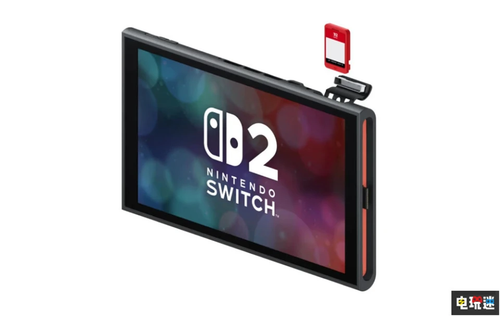
He also streamed Netflix through Google TV and connected a Nintendo Switch 2 during testing. That gives the projector some flexibility for streaming and gaming when travelling, as well as movie nights in the garden or other places where an outlet may not be nearby.
At the time of his review, the Capsule 3 Laser was listed at $749.99, with an Amazon price of $599.99. The higher price reflects features such as the built-in battery, compact design, laser light source, Google TV, and USB-C charging.
The Capsule 3 Laser is best suited to buyers who expect to make regular use of that portability. Its battery and compact size have much more value when the projector will frequently travel beyond the living room.
Home Streaming Pick: Xming Episode One
For: Movie nights, streaming, and smaller home spaces.

Sourced from Formovie
For a projector that will mainly stay at home, built-in streaming, picture quality, and easy setup are useful places to start. A compact design can also be helpful in bedrooms and apartments where the projector may need to be stored away between uses.
The Xming Episode One fits that kind of setup with native 1080p resolution, Google TV, Netflix support, automatic image adjustment, and Dolby-certified audio. It can project an image up to 120 inches and has a 1500:1 contrast ratio.
Google TV puts streaming directly on the projector, while the automatic setup features reduce the amount of adjustment needed when you move it or bring it out for a movie. Its compact design also makes it easier to move between rooms or store away after use.
On Heyup, the Episode One has a 4.6 Heyup Score based on 125 reviews. Its other product highlights include a fully enclosed light engine designed to protect the internal components from dust.
The Episode One needs external power, making it most at home in bedrooms, living rooms, and apartments where an outlet is readily available. It suits buyers looking for a compact Full HD projector with streaming built in and a simple setup for regular viewing at home.
A Quick Look at the 2026 Picks

Are Portable Projectors Good Gifts?
A portable projector makes more sense as a gift when you think about how the person already spends their time.
Someone who loves movie nights but does not have space for a large TV may enjoy a compact home projector. A family may get more use from something they can carry into another room when the main TV is occupied. Someone who camps or travels regularly may appreciate battery power far more than someone who watches everything from bed.
For a first projector, the Magcubic HY450MAX keeps the entry price relatively low and gives the recipient plenty to experiment with. The Heyup community experience also shows how easily it can find different jobs around the house.
For someone who is regularly on the move, the Nebula Capsule 3 Laser has a clearer travel focus. Its battery, compact shape, and Google TV setup mean there is less to carry around with it.
For someone who mainly streams at home, the Xming Episode One keeps the setup smaller and puts Netflix and Google TV directly on the projector.
For gifting, it helps to picture where they’ll set it up and what they’ll use it for.
Which Portable Projector Is Right for You?
The Magcubic HY450MAX is a good starting point for budget-conscious home viewing. Heyup community members found it easy to move between rooms and quick to set up, with the large Full HD picture performing particularly well in darker spaces.
The Nebula Capsule 3 Laser is better suited to buyers who plan to take their projector beyond the home. Its compact design, built-in battery, Google TV, and USB-C charging make it convenient to travel with, and Heyup testing recorded around 2.5 hours of video playback on a charge.
For streaming at home, the Xming Episode One combines native 1080p projection with Google TV, Netflix support, and a compact design that works well for bedrooms, apartments, and other smaller spaces. Its 4.6 Heyup Score, based on 125 reviews, also gives buyers a broader pool of user feedback to draw from.
Your choice will depend on where and how you plan to use your projector. Think about the room, available light, access to power, and how often you expect to move it. Once you know that, features such as brightness, resolution, battery life, streaming, and connectivity become much easier to compare.
Specs can narrow down your options, but real user experiences add useful context around what those features are actually like to live with. Together, they give you a much clearer idea of which projector fits the way you plan to watch.