RayNeo Air 4: HDR Ushers in the Next Era of Smart Glasses
Over the past year, the spotlight in the wearables world has shifted from AR to AI glasses—lightweight devices that focus on simple interactions rather than immersive visuals. As a result, AR or “movie-watching” glasses, once the talk of the town, have quietly faded into the background. But behind the scenes, manufacturers haven’t slowed down. In fact, they’ve been quietly refining the experience.
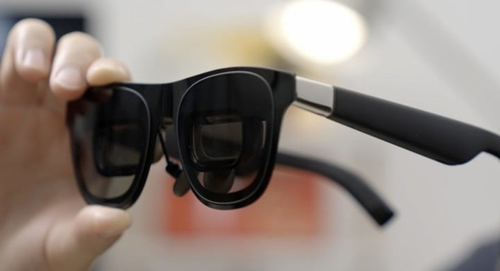
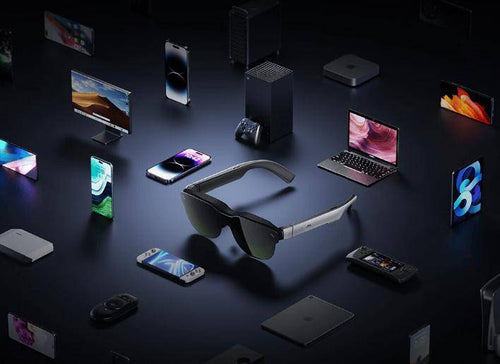
The best example? The upcoming RayNeo Air 4. RayNeo Innovation recently confirmed its official release for October 23, announcing it as the world’s first HDR-capable movie-watching glasses, supporting 1.07 billion colors (10-bit color depth).

A Shift in Focus: From Screen Size to Picture Quality
In the past, AR and movie-viewing glasses were sold on the promise of a “pocket-sized giant screen,” giving users a theater-like experience anywhere. But image quality often took a back seat.
The RayNeo Air 4 changes that narrative. With HDR10 support, 10-bit color depth, and B&O-tuned audio, it elevates the entire viewing experience—moving from spectacle to substance. It’s a move that could redefine how we evaluate visual wearables, setting the stage for a true convergence of AI and AR.
Why HDR Matters More Than Brightness
For devices built primarily for movies and gaming, brightness alone doesn’t guarantee great visuals. What truly matters is contrast, color gradation, and visual depth—the very things HDR enhances.
When Lei Technology reviewed the XREAL One Pro earlier this year, they praised its optics but noted one major drawback: no HDR support. Without it, even bright displays tend to look flat and washed out, with dull highlights and lifeless shadows.

By contrast, the RayNeo Air 4’s HDR10 mode ensures richer contrast, smoother gradations, and image details that mirror the creator’s intent. It supports the SMPTE ST 2084 (PQ) standard, BT.2020 color space, and full 10-bit rendering, aligning it with modern HDR-capable displays and content formats used in streaming and gaming.
In short, HDR10 doesn’t just make things brighter—it makes them real.
The World’s First HDR Chip for Smart Glasses
At the heart of this leap forward is RayNeo's custom image-quality chip, the first ever designed specifically for eyewear.
True HDR isn’t something that can be patched in—it’s a full-chain capability requiring:
-
10-bit hardware panels and BT.2020 color gamut support.
-
Accurate HDR metadata recognition and tone mapping.
-
System-level HDR output activation.
The Air 4’s new chipset ensures all three are perfectly aligned, transforming HDR from a spec sheet feature into a true-to-life experience.
Of course, HDR depends on more than hardware. Playback devices, streaming platforms, and signal chains must all support HDR output. Otherwise, users only see “pseudo-HDR.” That’s why RayNeo‘s approach—developing the technology in-house—matters. It guarantees consistency across the full visual pipeline.
Redefining What “Movie Glasses” Can Be
The RayNeo Air 4 is a milestone in the evolution of near-eye displays. Instead of focusing on screen size or gimmicks, it refocuses on cinema-grade image quality—bringing true depth, contrast, and emotional resonance to portable displays.
It’s no longer just a “big screen in your pocket.” It’s a personal cinema, tuned for realism and immersion.
The Bigger Picture: AI + AR Are Converging
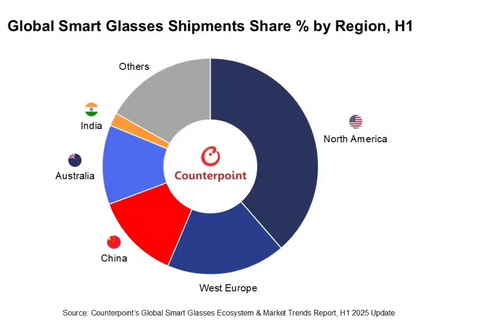
Meanwhile, the broader smart glasses market is evolving rapidly. While AI glasses like Ray-Ban Meta dominate headlines with lightweight interactions, AR manufacturers are doubling down on entertainment and visual fidelity.
-
XREAL, for example, integrated its One Pro into the Android XR ecosystem, creating a bridge between AR hardware and full app compatibility.
-
INMO launched its GO3 AI glasses and Yingmu World ecosystem, introducing SDKs and a developer fund to expand AR content and utility apps.
Each of these moves strengthens a shared goal: to make smart glasses usable, immersive, and intelligent—the foundation of future personal computing.
From “Nice-to-Have” to “Need-to-Have”
The evolution of products like the RayNeo Air 4 proves that AR glasses are far from obsolete. Instead, they’re finding their identity—focusing on what they do best: cinematic visuals, immersive gaming, and enhanced viewing experiences.
Meanwhile, AI glasses continue to push boundaries in interaction and assistance. Eventually, these paths will converge. As AI meets AR, we’ll move toward truly intelligent, display-driven devices that don’t just show information—but understand and enhance our world in real time.
Would you rather own AI glasses that understand your environment, or HDR-capable AR glasses like the RayNeo Air 4 that bring cinema-grade visuals to your eyes?