HOVERAir Unveils VERSA, a Pocket Gimbal Camera That Can Fly

The modular camera uses a three-axis gimbal on the ground, then adds protected wings for controller-free tracking, automated flight modes, and 3D capture.
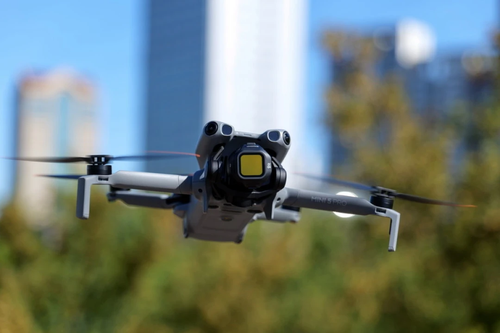
HOVERAir has unveiled VERSA, a two-in-one camera that works as a pocket-size handheld gimbal and converts into an autonomous flying camera when its wing module is attached. The design is aimed at creators who want both ground-level and aerial footage without carrying two separate camera systems.

That switchable format is the main news. In handheld mode, VERSA uses a three-axis gimbal for stabilized walking shots and vlogs. Attach the wing module with its protected propellers, and the same camera becomes a self-flying device that can launch without a conventional controller and use AI tracking to keep a person in frame.
One Camera for Ground and Air
HOVERAir describes VERSA as a pocket camera that can move “from hand to hover” in seconds. The idea is straightforward: use it like a compact gimbal camera for street scenes, family videos, or travel vlogs, then add the wings when a wider or elevated perspective is needed.

The company says VERSA supports more than 10 intelligent flight modes. These automate camera movements and subject tracking rather than requiring the user to pilot every shot manually. HOVERAir has not yet listed the complete set of modes or explained whether VERSA will support manual flight through its existing Beacon and joystick accessories.
The protected propeller design follows the approach used across HOVERAir’s self-flying camera lineup. It should make close-range takeoff and landing less intimidating than exposed-propeller drones, but safe and legal operation will still depend on local drone rules and the locations in which users fly.
AI Framing and 3D Worlds
VERSA also introduces AI-assisted composition. According to HOVERAir, the camera analyzes its surroundings, suggests a shooting position, and applies an intelligent crop to keep the composition balanced. This is a company-described feature rather than an independently tested result, so its reliability across crowded, low-light, and fast-moving scenes remains to be seen.
Another new feature, called 3D Worlds, sends VERSA through a precise 360-degree flight path and reconstructs the captured scene as a three-dimensional image. HOVERAir says the result can be viewed from different angles and shared across devices. The company has not yet detailed the reconstruction format, processing time, resolution, or device requirements.
HOVERAir is also making broad claims about dynamic range and low-light image quality, but it has not published the sensor size, lens specifications, video resolutions, frame rates, or bit-depth options. Those details will determine whether VERSA can genuinely replace a dedicated pocket gimbal camera, rather than simply supplement one.
A Familiar Idea With a More Autonomous Approach

The concept of moving one camera system between a handheld grip and a drone is not entirely new. As DroneXL noted while analyzing HOVERAir’s teaser, GoPro’s Karma used a removable camera-and-gimbal assembly that could be transferred to the Karma Grip. VERSA takes a different approach by making the handheld camera the starting point and adding HOVERAir’s controller-free tracking and preset flight modes.
Within HOVERAir’s own range, VERSA also has a different job from the X1 PRO and PROMAX, which emphasize action tracking, and AQUA, which is designed for water sports. VERSA appears to target everyday travel and vlogging, where reducing the number of devices in a bag may matter more than maximum flight performance.
Price and Availability
HOVERAir has not announced a price, preorder date, shipping schedule, or confirmed launch markets for VERSA as of July 31, 2026. The company’s product page currently invites visitors to register for updates rather than place an order.
Several other purchasing details are still missing, including total flight weight, battery life, storage, microphone support, weather resistance, obstacle sensing, and accessory compatibility. Until HOVERAir publishes those specifications and independent testing begins, VERSA is best viewed as a promising new camera format rather than a proven replacement for both a pocket gimbal and a drone.