Xiaomi and Huawei Join the Fray: Is the 'Air' Smartphone Battle Just Beginning?
Amidst a wave of new products championing the "AI Phone" moniker, the emergence of the iPhone Air seems somewhat out of place. It doesn't boast superior computing power or a brand-new camera system, yet it has ignited an industry-wide imitation craze in a short time, purely on the strength of being the "lightest flagship phone ever."

When Apple picked up the word "Air," it was as if the entire mobile phone industry was collectively reawakened—thin and light once again became a hot topic of discussion.
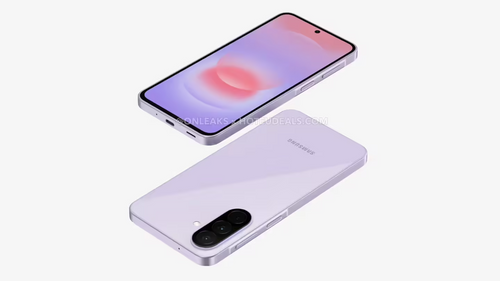
Beyond Apple, China's top 5 phone manufacturers are also actively joining the "Air" battle. Recently, an offline poster for the Huawei Mate 70 Air surfaced online, hinting at the November debut of the Mate series' first thin and light flagship. Xiaomi is reportedly evaluating a new 17 Air model, focusing on a mid-sized, high-pixel, all-around solution. Furthermore, OPPO, vivo, and Honor also have related plans in the works.

Extreme thinness and lightness are trendy again, but do consumers really want "Air" phones?
Why is Everyone Making an "Air" Phone?
The war for thinness in smartphones had already been fought once during the 4G era. The vivo X5 Max claimed the title of "world's thinnest phone" at 4.75mm, while the Huawei P6, OPPO R5, and Xiaomi 5 all competed on "slim hand-feel." As we entered the 5G and AI era, phones became progressively heavier. Large camera modules, advanced cooling systems, AI accelerator chips, and massive batteries all contributed to bodies swelling from 6mm to 9mm and weights increasing from 150g to over 230g. As manufacturers pushed specs to the limit, "thin and light" became a luxury. This is why the iPhone Air's debut was so stunning. But when "thin and light" becomes Apple's marketing symbol, imitation is almost inevitable. Samsung, Transsion, Moto, Xiaomi, Huawei—nearly every brand has launched or leaked models with suffixes like "Air," "Slim," or "Edge."

This shift isn't accidental. According to IDC data, over 70% of users believe that "phone performance is already sufficient," making "hand-feel" and "weight" their most intuitive criteria when choosing a new device. The increasing bulk of flagship phones is creating a backlash; a 9mm thickness and 200g+ weight cause fatigue during prolonged use. This is especially true for female users, whose preference for lightness is more pronounced than ever, as it relates not just to portability but also to a sense of elegance and sophistication. Design innovation, compared to performance upgrades, is more effective at capturing the attention of the average consumer. Making a phone thinner appears to be the most cost-effective and visually stimulating design change. However, reality might be about to deal the market a heavy blow, as early adopters of the thin-and-light trend—Apple, Samsung, and Transsion—seem to have fallen short of their expected results.
Why Do "Air" Phones Get Hype but Not Sales?
The word "Air" has indeed been everywhere in recent months, but hype does not equal success. Take the iPhone Air, for example. Apple redefined its product line with a design that is "so light you can barely feel it," but to achieve this, it compromised on the speaker cavity, reduced the battery capacity to about 85% of the Pro model, and used a thinner main camera module. The result? The lightest flagship became the "most incomplete flagship experience." Many users reported that while the hand-feel was excellent, the device suffered from more noticeable heat, shorter battery life, and audio quality that wasn't up to Apple's standard. Recent reports suggest that initial sales of the iPhone Air did not meet Apple's expectations, leading to a slowdown in subsequent production batches.

Samsung faced a similar situation. The Galaxy S25 Edge was a more mature thin-and-light phone, retaining dual speakers and dual cameras while using a top-tier SoC. However, frequent complaints about "reduced battery life," "frame drops at high temperatures," and a "downgraded camera module" caused the phone's reputation to plummet. Unlike Apple, Samsung reportedly halted the development of the S25 Edge's successor, temporarily exiting the thin-and-light race. It's clear that while manufacturers are betting on "Air" to become their next growth curve, it currently serves more as an emotional talking point than a sales driver. Consumers are still rationally balancing eye-catching design with practical user experience. This is where Chinese brands see an opportunity. Leaks suggest the Xiaomi 17 Air will likely feature a 6,000mAh battery with 100W fast charging, tackling the poor battery life of thin phones head-on. The Huawei Mate 70 Air is also expected to prioritize a long-lasting battery solution. The path forward for thin-and-light phones seems to be making no compromises on battery, performance, and camera. Manufacturers shouldn't just aim to be thinner; they need to be smarter, making lightness a part of the complete experience, not a sacrifice for it.
The Thin-and-Light "Air" Design is an Inevitable Trend
While the market hasn't immediately embraced "thin and light," there are significant underlying signals. Hardware competition has reached a plateau, with flagship phones from different brands offering similar performance and camera capabilities. Against this backdrop, the "Air series" is seen by many brands as a breakthrough—a shortcut to regain user attention and generate buzz. The core reason "Air" phones haven't taken the market by storm yet is the significant gap in user experience compared to mainstream flagships, coupled with high price tags. For instance, the iPhone Air's compromises (eSIM only, single camera, single speaker, sub-4000mAh battery) are hard to justify at its premium price point, especially when standard Android flagships offer more comprehensive features for less.
However, this doesn't mean the push for thinness is a flawed premise. On the contrary, it could be a design revolution in the making. New technologies like silicon-carbon anode batteries, LIPO/COE packaging, stacked motherboards, titanium alloy frames, and layered thermal management are providing new solutions. When manufacturers shift from pursuing extreme thinness for its own sake to using these innovations to help all phones "slim down," they will create meaningful lightweight devices that appeal to a broader audience. Therefore, we can boldly predict that while 2025 may be an experimental year for "Air," 2026 is likely to be the year thin-and-light flagships truly mature. The real "Air Era" won't be defined by one or two niche models, but when thin and light becomes a fundamental characteristic of all devices—when the technology radiates to every phone, eliminating pointless spec-stacking and returning hand-feel to the core of the user experience. That is the true significance of the Air trend's potential to revolutionize the smartphone market.