The Smartphone Telephoto War: Continuous Zoom vs. Dual-View vs. Dual 200MP
Continuous Optical Zoom and Dual-View Periscope: Which is the Standard?
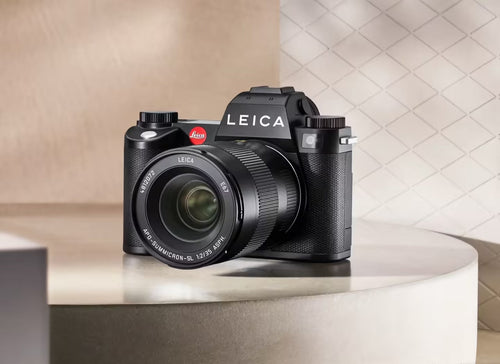
First, let's look at the recently released Xiaomi 17 Ultra. Its biggest upgrade is a continuous optical zoom lens that supports a range from 3.2x to 4.3x. The Leica edition even features a manual zoom ring on the camera module, which can be rotated to adjust the zoom or customized to control exposure or focus. Many people's initial reaction to this is: can a mere 70-100mm zoom range truly be considered an innovation?

However, if you use a smartphone like a traditional camera for any length of time, you'll understand that this seemingly short range is actually the most frequently used and technically demanding. Previously, smartphone zooming was more like shifting gears, with options like 3x, 5x, and 10x. Users could only get good image quality at these pre-set magnifications. For instance, pushing from 3x to 3.6x would result in a noticeable drop in quality and an increase in noise, forcing you to either step back and recompose or crop the image, sacrificing either composition or quality. The significance of the Xiaomi 17 Ultra's continuous optical zoom lies here: it's not about zooming further, but about making composition controllable within high-frequency focal lengths. Every adjustment you make is a change in optical focal length, not an algorithm enlarging a screenshot—a difference that becomes immediately apparent upon use.

The trade-offs of Xiaomi's approach are also clear: continuous optical zoom requires a more complex mechanism and stricter calibration, meaning it's difficult to extend the zoom range significantly. To achieve a 3-7x range, the camera module would need to be about three times thicker, which no user would accept. It also results in weaker extreme telephoto capabilities and a longer minimum focusing distance for telephoto macro shots. However, these can be seen not as flaws, but as a new strategic choice: Xiaomi believes the telephoto range users truly need is for framing shots between 3x and 5x, not for a 20x telescope.

After discussing Xiaomi, we must mention the dual-view periscope technology on the Huawei Pura 80 Ultra. Its goal is different, focusing on making the telephoto lens robust, stable, and reliable. The core of Huawei's solution can be summarized as "one sensor, two periscope lens groups, and a movable prism to switch the light path," providing two optical focal lengths at 3.7x and 9.4x (equivalent to 83mm and 212mm). This structure is noteworthy because it precisely addresses a major pain point of smartphone telephoto photography: it establishes a high baseline for telephoto detail. When shooting a concert, the frustration often isn't insufficient magnification, but that the image is unusable even when zoomed in. Huawei's approach is more like a traditional camera: rather than aiming for smoothness across the entire range, it perfects two critical telephoto settings. It uses the 3.7x focal length for high-frequency scenarios like portraits, exhibitions, and travel, and the 9.4x for extreme scenes requiring true long-range capabilities, like stage close-ups and distant details.


When Internal Space Runs Out, Manufacturers Look for a 'Second Leg'

As we've analyzed, Xiaomi enhances the mid-telephoto range with continuous zoom, while Huawei achieves stronger long-range control with its dual-view system. Both are innovations targeting users' most common shooting scenarios. Meanwhile, OPPO and vivo have chosen another path: breaking through the physical limits of smartphone imaging with more powerful hardware configurations and external lens extensions. Both are betting on dual 200MP sensors to boost the telephoto lens's resolution, detail, and low-light performance. However, despite their similar hardware stacking, they differ significantly in how they handle focal length coverage and consistency.

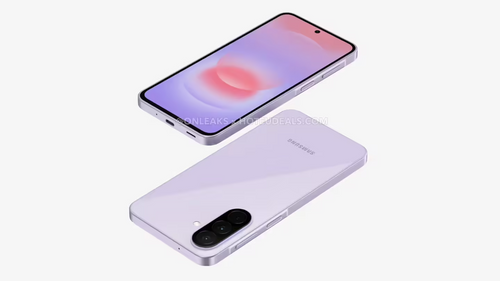
According to leaks, the OPPO Find X9 Ultra is highly likely to feature a dual 200MP setup. The challenge with hardware stacking is balancing the phone's thickness and weight. OPPO's solution is to increase sensor size and light intake alongside stacking hardware. This not only improves image quality at a given focal length but also enhances low-light performance with better detail, less noise, and a wider dynamic range. Vivo is also following the hardware stacking route, with the rumored X300 Ultra featuring a similar dual 200MP main + telephoto configuration. The difference is that vivo focuses more on achieving "consistency between focal lengths" and uses external lenses to further extend its telephoto capabilities. Vivo's dual 200MP design aims to ensure a smooth transition between focal lengths, avoiding the jarring quality drop seen when switching from 3x to 10x on some devices.


Xiaomi and Huawei Aren't 'More Correct,' Just on Different Paths
So, what is the future direction for smartphone telephoto lenses? This isn't a single-choice question but one with multiple answers. Xiaomi's continuous zoom bets on a "camera-like experience for high-frequency focal lengths," turning the 3x-5x range from fixed 'gears' back into a 'lens.' Huawei's dual-view system bets on "certainty for critical long-range shots," raising the quality floor for distant details. Meanwhile, OPPO and vivo's hardware stacking and external accessories signal that once internal space is maxed out, telephoto development must either push hardware more aggressively or offload some optical capabilities to modular components. The end game for telephoto is not about who can zoom the farthest, but who can create a lens you're willing to use repeatedly and confidently. The winner will be the one that minimizes hesitation when zooming between 3x and 10x, eliminates jarring transitions, and ensures consistent results. When that happens, the debate over technology routes will finally have its answer.